
Federico Ponsa
Founder & Shaper
Product developer. Shaper. Surf coach.
Northern Beaches, Sydney.
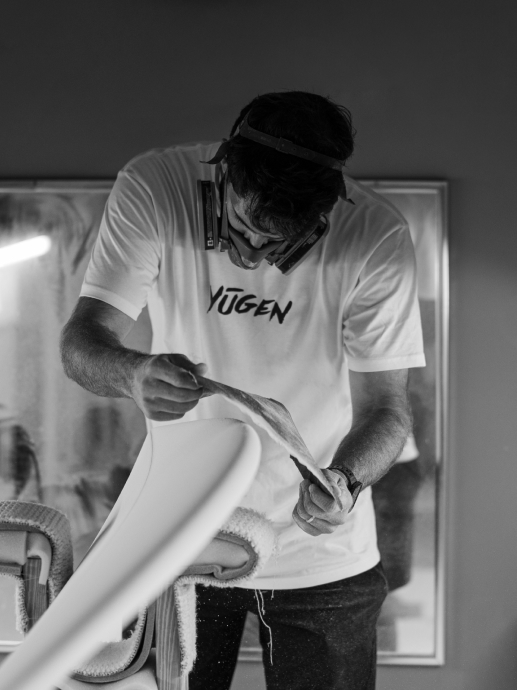
A brand built around a feeling, not a name
Yugen is a Japanese concept rooted in Zen Buddhism. Two characters: mysterious and deep. Not a word with a direct translation. A feeling.
One definition describes it as the sensation you get watching geese disappear into the horizon, wondering where they have been and where they are going. That pull toward the unknown. That quiet wonder.
Every time a new surfboard is picked up, that feeling arrives. How will it move? What will it do in the water? That question, that specific curiosity, is what this brand is built around.
The name was never going to be a person's name. What matters is not who made it. What matters is what it does for your surfing.
How this started
The obsession started at age seven or eight. A TV show about a local Argentine surfboard brand, showing how a board gets built from nothing. That image stayed.
Years later, studying engineering at university, it became clear that building things, understanding how they work and why, was the thread running through everything. Surfing had always been there too, but boards were the real fascination. The decision to leave the degree and come to Australia to make surfboards full time was not impulsive. It was the only thing that made sense.
At nineteen, a small skateboard business had already started, building longboards and downhill boards. A chance encounter with a shaper in the same city led to a shared workshop, and the first surfboard got shaped there. Rough, experimental, genuinely exciting.
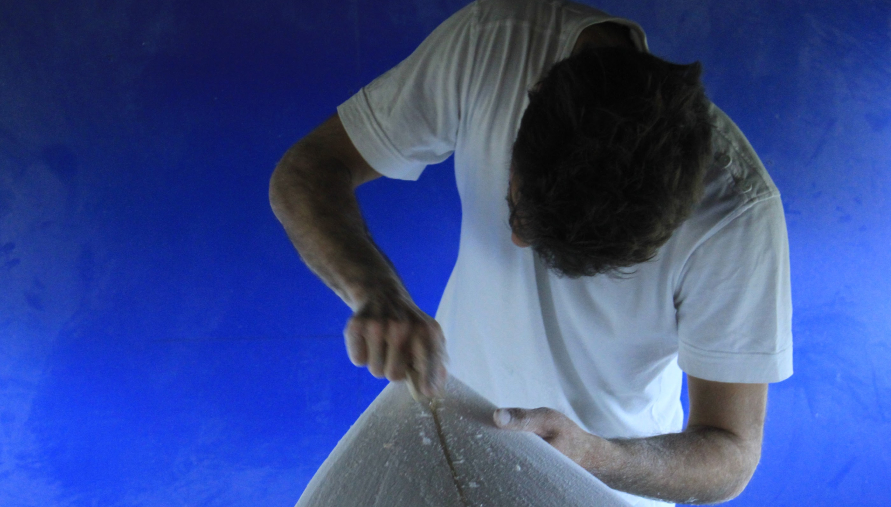
The move to Sydney happened because of a friend from Uruguay who lived there. Before landing, a Google Map was already marked with every surfboard factory on the Northern Beaches. Arrived. Knocked on doors. Asked for work. Started with ding repairs at PCC Surfboards, then sanding at Chilli, then Haydenshapes and MG Surfboards, where Yugen started taking shape. The real education happened at Rhino Laminating, working in the same bays as Mike Psillakis and Steve O'Donnell, and occasionally watching shapers like Simon Anderson and Malcolm Campbell come through. You learn a lot by being in the right room and paying attention.
Four years at FCS followed, first in the product development team working on fin systems, then as Product Development Manager when the company relocated to Coffs Harbour. Seeing how the world's best surf equipment actually gets made, through testing, iteration and proper systems rather than gut feeling, changed the way everything gets approached.
When that chapter ended, the return to shaping and coaching was full time and deliberate. Not a fallback. A decision.
Boards are now made at Force 9 Surfboards. It was the first factory visited on arriving in Australia. It took a while to come back. Jim and Sam are still there.
The method came from hitting the same wall
For a long time the working belief was simple: the right board fixes everything. Find the right shape, and the surfing follows.
It did not work that way. Time in the water helped, but not consistently and not fast enough. One coaching session started to challenge the assumption. Then a conversation with a professional surfer offered a different frame: performance is 50/50. The board and the rider. Both matter equally.
That sat for a while. A surf skate followed. Over a year of practice on ramps and in skateparks, trying to translate movement into better surfing. Nothing changed.
Then one afternoon, in a flat car park while a son was learning to ride a bike, something shifted. Just playing around, trying surf movements on flat ground, failing at exactly the same points that caused problems in the water. So the troubleshooting started. Weight balance. Sequencing. Different cues. Movements began connecting. Speed stopped dying mid-manoeuvre.
Research followed. Then specific exercises, created from scratch. Then testing them with other surfers. The results came fast, faster than years of generic coaching had produced. People who had not seen the surfing for a few months said something had clearly changed. Word spread without any advertising.
Taking it seriously meant doing it properly. A Surfing Australia Level 1 Coaching Licence followed, with Level 2 underway. Not because a certificate changes what happens in the water, but because if this is a real business, it should be built on solid ground.
The method is what it is because of that specific frustration. The same analytical mindset applied to fin systems at FCS got turned toward surf movement. Breaking things down into high-leverage, repeatable drills. Building the muscle memory on land first. The water is where you test it, not where you learn it from scratch.
That is the Yugen approach. It is not vague. It is not generic advice. It is a system, and it was built by someone who needed it to work.
Start with the quiz
Find your level, find your limiter, get a 6-week plan. That's where every progression path at Yugen begins.
Take the Free Quiz →